ECB 금리 인상 2026 — 2.50%로 올린 진짜 이유와 한국 기업 충격ECB Rate Hike 2026 — Why 2.50% Matters for Korean Companies
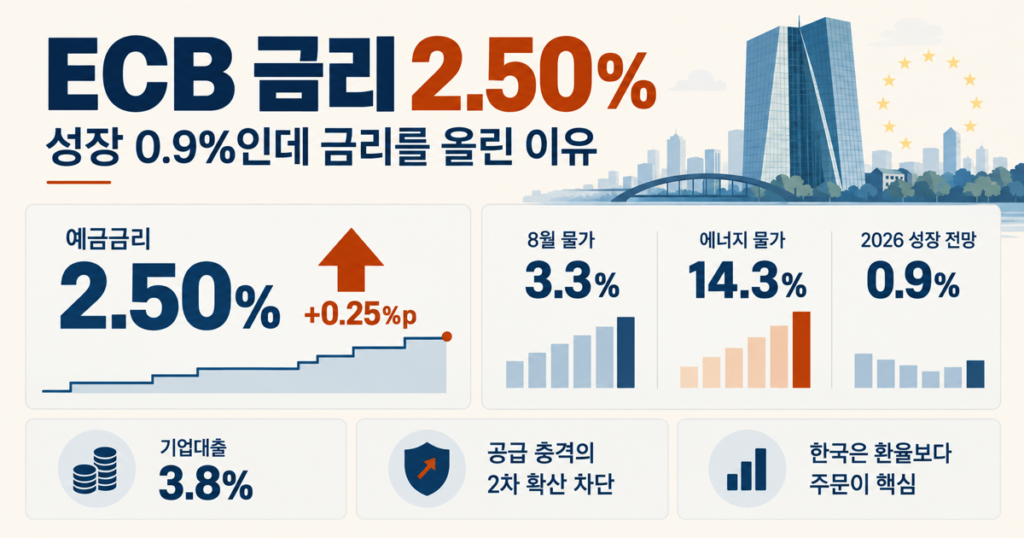
ECB 금리 인상 2026 결정으로 유로존 예금금리는 2.50%가 됐습니다. 유럽중앙은행은 9월 10일, 올해 성장률을 0.9%로 내다보면서도 금리를 0.25%포인트 올렸습니다. 8월 소비자물가가 3.3%, 에너지 물가가 14.3%까지 오른 상황에서 물가의 두 번째 확산을 막겠다는 선택입니다.
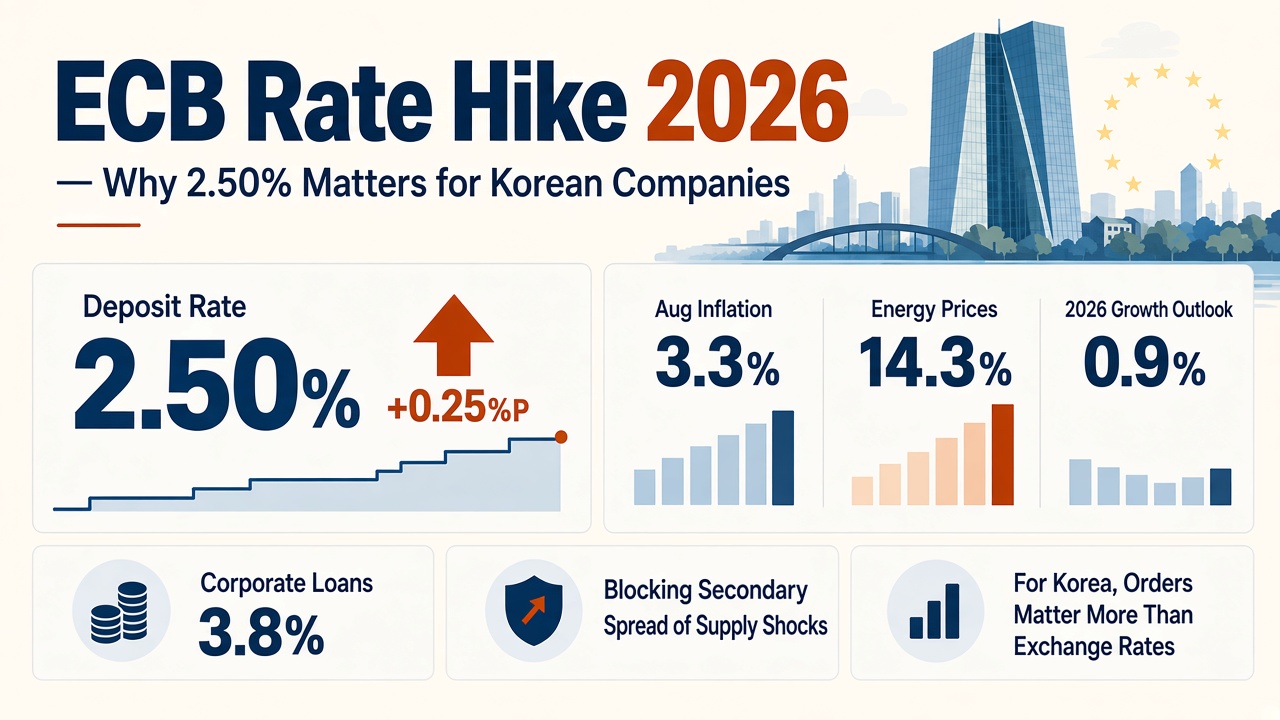
The ECB rate hike in 2026 lifted the euro-area deposit rate to 2.50%. On September 10, the central bank raised rates by 25 basis points despite forecasting growth of only 0.9% this year. With August inflation at 3.3% and energy inflation at 14.3%, it chose to stop a second wave of price pressure before it spread.
금리를 올려도 원유와 가스 공급은 늘지 않습니다. 그래서 이번 결정은 얼핏 앞뒤가 맞지 않아 보입니다. ECB가 겨냥한 것은 에너지 가격 자체가 아니라, 오른 운송비와 전기료가 상품 가격과 임금으로 계속 옮겨 붙는 과정입니다.
그 과정이 기업 실적과 소비, 투자, 환율을 어떻게 가르는지 차례로 보겠습니다. 발표된 수치는 사실로, 한국 기업과 자산시장에 미칠 영향은 조건부 추론으로 구분했습니다. 이 글은 투자 권유가 아닙니다.
ECB 금리 인상 2026, 정확히 무엇이 바뀌었나
ECB는 세 금리를 한꺼번에 올렸습니다. 은행이 남는 돈을 중앙은행에 맡길 때 받는 예금금리는 2.50%, 평소 중앙은행에서 돈을 빌릴 때 쓰는 주요 재융자금리는 2.65%, 급하게 하루 자금을 빌릴 때 적용되는 한계대출금리는 2.90%입니다. 새 금리는 9월 16일부터 적용됩니다.
이 금리들은 유럽 금융시장에서 돈값의 기준이 됩니다. 은행 조달비용이 오르면 기업대출과 주택담보대출도 시차를 두고 비싸집니다. 기업의 신규 은행대출 금리는 5월 3.6%에서 6~7월 3.8%로 이미 올랐고, 7월 회사채 조달비용은 4.0%였습니다.
-
1
ECB +0.25%p
예금금리 2.50%
-
2
은행 조달비용
기업대출 금리 상승
-
3
소비·투자
금리 민감 지출 둔화
-
4
가격 전가
2차 물가 압력 완화
공급 충격인데 왜 금리를 올렸을까
출발점은 과소비가 아니었습니다. ECB 모형은 2026년 1~5월 헤드라인 물가가 1.7%에서 3.2%로 오른 1.5%포인트를 거의 전부 에너지 공급 충격으로 설명합니다. 재정정책과 통화정책의 기여 추정치는 각각 -0.2%포인트와 -0.1%포인트였습니다. 정부와 중앙은행이 수요를 과하게 띄워 만든 물가와는 결이 다릅니다.
그렇다고 중앙은행이 기다리기만 할 수도 없습니다. 기름값과 전기료가 오르면 운송비와 제조원가가 상승하고, 식품과 공산품 가격이 뒤따릅니다. 생활비가 오른 노동자는 임금 인상을 요구합니다. 기업이 그 인건비를 다시 가격에 얹기 시작하면 에너지 가격이 멈춰도 물가는 잘 내려오지 않습니다.
금리 인상은 바로 이 연결을 느리게 합니다. 대출이 비싸지면 주택 구입, 설비투자, 재고 확대 같은 금리 민감 지출이 줄어듭니다. 기업도 늘어난 비용을 판매가격에 모두 넘기기 어려워집니다.
공급을 고치는 약은 아닙니다. 불이 다른 방으로 옮겨 붙지 않게 문을 닫는 조치에 가깝습니다.
2021~22년
봉쇄 해제 뒤 급증
수요
공급 · 병목+에너지 충격
정책 · 재정·통화 부양
2026년
+1.5%p
물가 상승
주된 원인 · 거의 전부 에너지 공급
정책 기여 · 재정 -0.2%p·통화 -0.1%p
성장률 0.9%인데 ECB가 버틸 수 있다고 본 근거
ECB의 기본 성장 전망은 2026년 0.9%, 2027년 1.4%, 2028년 1.5%입니다. 낮은 숫자지만 올해와 내년 전망은 6월보다 높아졌습니다. 2분기 경제가 국가와 업종 전반에서 예상보다 잘 버틴 결과입니다.
7월 실업률은 6.4%였습니다. 국방과 인프라 지출이 제조업 주문을 받쳤고, 소비자신뢰와 서비스업도 회복됐습니다. AI 관련 수요도 디지털 서비스와 기업투자, 수출에 나타났습니다. ECB는 이 버팀목이 0.25%포인트 인상을 견딜 여지를 준다고 본 셈입니다.
물론 확정된 미래는 아닙니다. ECB도 성장 위험은 아래쪽, 물가 위험은 위쪽이라고 밝혔습니다. 에너지 공급 차질, 추운 겨울, 낮은 가스 재고가 겹치면 물가는 더 오를 수 있습니다. 반대로 금융시장이 흔들려 대출이 급격히 줄면 성장률은 전망을 밑돌 수 있습니다.
ECB 2026~2028년 물가와 성장률 전망 막대그래프. 2026~2028년 ECB 직원 기본 전망. 확정치가 아닙니다.
기업 실적과 산업 구조 — 비용은 같이 오르지만 매출은 다르게 움직입니다
첫 충격은 에너지를 많이 쓰고 빚도 많은 기업에 갑니다. 화학·유리·제지·금속·운송업은 전기와 가스 비용이 오릅니다. 대출 만기까지 돌아오면 더 높은 금리로 갈아타야 합니다. 판매가격을 올리기 어려운 회사는 매출이 같아도 영업이익률이 낮아질 수 있습니다.
주문의 출처가 정부 예산인 업종은 사정이 다릅니다. 국방·인프라 사업은 금리보다 정책 일정과 장기 계약의 영향을 더 받습니다. 전력망, 방산, 자동화, 데이터센터처럼 발주가 이미 잡힌 사업은 소비재보다 매출이 오래 버틸 가능성이 있습니다.
결국 자본은 값싼 에너지와 낮은 금리에 기대던 생산에서 에너지 효율이 높은 설비와 정책 지원 사업으로 이동할 수 있습니다. 모든 투자가 동시에 멈춘다는 뜻은 아닙니다.
수익을 회수하는 데 오래 걸리는 민간 프로젝트가 먼저 밀리고, 정부가 필요성을 뒷받침한 프로젝트가 남습니다. 금리 인상이 산업별 격차를 키우는 지점입니다.
소비·주택·증시로 압박이 번지는 순서
가계는 에너지 요금으로 쓸 돈이 줄고, 높은 주택대출 금리로 새 집을 사기 어려워집니다. 주택담보대출 금리는 6~7월 3.5%였고, 대출 증가율은 7월 3.0%로 둔화했습니다. 고용이 버티는 동안 소비 전체가 바로 무너지지는 않겠지만 자동차·가전·여행처럼 미룰 수 있는 지출부터 약해질 수 있습니다.
주식시장에서는 현금과 가격 결정력이 중요해집니다. 부채가 적고 가격을 올릴 수 있는 기업이 상대적으로 유리합니다. 장기금리가 오르면 먼 미래 이익의 현재 가치가 작아져 성장주에는 부담입니다. 유로 강세는 수입 에너지 가격을 낮출 수 있지만, 환율은 미국 금리와 위험회피 심리에도 움직입니다. 미국 10년물 금리와 기업 조달비용을 함께 봐야 하는 이유입니다.
한국 기업과 원화 — 유로 강세보다 주문 감소가 더 중요합니다
한국 기업에는 환율, 수요, 금융비용의 세 길로 들어옵니다. 먼저 유로가 원화보다 강해지면 유럽 매출을 원화로 바꾼 숫자는 커집니다. 하지만 현지 임금과 부품비도 유로로 지급합니다. 환산 매출 증가를 영업이익 증가로 곧바로 읽으면 안 됩니다.
더 중요한 것은 주문입니다. 유럽 가계가 자동차와 가전 구매를 미루면 한국 기업의 수출 물량과 현지 공장 가동률이 함께 낮아집니다. 유럽에서 공장이나 판매금융을 운영하는 자동차·배터리 기업은 현지 차입비용도 더 부담합니다.
특히 배터리와 전기차 공장은 초기에 큰돈이 필요합니다. 금리가 0.25%포인트 오른 방향 변화만으로도 신규 공장의 예상 수익률과 착공 시점이 달라질 수 있습니다.
국방·전력망·자동화 주문은 예외가 될 수 있습니다. 유럽 공공투자가 이어지면 한국 조선·방산·전력기기·산업장비의 수주를 받쳐 줍니다. WTO 상품무역 바로미터는 102.0으로 기준선 100을 웃돌았고 전자부품 지수는 104.9였습니다. 유럽을 한 덩어리로 보기보다 소비재와 정책투자재를 나눠 봐야 합니다.
앞으로 볼 숫자 5개 — 사실과 전망을 구분하는 법
확인된 사실은 예금금리 2.50%, 8월 물가 3.3%, 에너지 물가 14.3%, 7월 실업률 6.4%, 기업대출 금리 3.8%입니다. 반면 2026년 물가 3.0%와 성장 0.9%는 ECB의 기본 전망입니다. 결과가 아니라 여러 전제를 둔 예상치입니다.
이제 에너지 물가가 근원물가와 임금으로 번지는지 봐야 합니다. 에너지와 식품을 뺀 근원물가는 8월 2.4%로 조금 내려왔습니다. 근로자 1인당 보수 증가율도 1분기 3.5%에서 2분기 3.3%로 둔화했습니다. 아직 임금과 서비스 가격의 악순환이 확인된 것은 아닙니다.
그다음은 기업대출 금리, 신용 증가율, 유로존 소비, 한국의 EU 수출 주문입니다. 에너지 가격이 내려가고 근원물가가 안정되면 이번 인상은 짧은 보험으로 끝날 수 있습니다. 반대로 에너지와 대출비용이 함께 높은 상태로 남으면 기업 이익, 설비투자, 소비가 동시에 약해질 수 있습니다. 유가 100달러가 한국 물가와 기업 비용에 미치는 경로도 같은 전달 과정을 보여 줍니다.
제 판단으로 이번 결정의 핵심은 0.25%포인트 자체가 아닙니다. 공급 충격이 일시적이라는 믿음이 흔들리자 ECB가 경기보다 물가 기대를 먼저 지키겠다는 신호를 보냈습니다. 한국 투자자는 유로 환율 한 줄보다 유럽 소비 주문, 현지 차입비용, 정책투자 수주를 따로 확인해야 합니다.
이번 0.25%포인트는 에너지 가격을 낮추는 금리가 아닙니다. 에너지 충격이 임금과 모든 가격으로 번지는 속도를 늦추는 금리입니다.
출처
- ECB — Monetary policy decisions, 10 September 2026
- ECB — Combined monetary policy decisions and statement
- ECB Blog — Why the drivers of inflation matter
- Reuters — Lagarde comments at ECB press conference
- AP — Europe’s central bank acts to quell inflation
- IMF — World Economic Outlook Update, July 2026
- WTO — Goods Trade Barometer, September 2026
- 내부 글 — 미국 10년물 금리와 기업 조달비용
- 내부 글 — 유가 100달러와 한국 경제
A rate hike cannot produce oil or bring in more gas. The target is the chain that follows: higher energy and freight costs raise other prices, workers seek compensation, and firms pass wage costs back to customers.
That chain separates the likely winners and losers across earnings, consumption, investment and currencies. Published numbers are identified as facts; the effects on Korean companies and markets are conditional analysis, not investment advice.
ECB rate hike 2026 — what exactly changed?
The ECB raised all three policy rates. The deposit facility rate is now 2.50%, the main refinancing rate 2.65%, and the marginal lending rate 2.90%, effective September 16. Together, they anchor the price of money for euro-area banks.
The pass-through was already visible. New bank lending rates for companies rose from 3.6% in May to 3.8% in June and July. The cost of market-based corporate debt stood at 4.0% in July.
-
1
ECB +25bp
Deposit rate 2.50%
-
2
Bank funding
Loan rates rise
-
3
Demand & capex
Sensitive spending slows
-
4
Price pass-through
Second rounds ease
Why raise rates against a supply shock?
This episode did not start with consumers spending too much. An ECB model attributes almost all of the 1.5-percentage-point increase in headline inflation between January and May 2026 to adverse energy supply shocks. Fiscal and monetary policy made small negative contributions.
The ECB still has a reason to act. Higher fuel, freight and electricity bills feed into food and manufactured goods. Workers seek higher pay to recover lost purchasing power. If companies then raise prices again, inflation can persist after energy prices stabilise.
Higher rates slow that loop by making housing, inventories and investment more expensive. They do not repair supply, but they reduce the room to pass every cost increase through.
2021-22
Post-lockdown surge
Demand
Supply · Bottlenecks + energy
Policy · Fiscal and monetary support
2026
+1.5pp
Inflation rise
Main driver · Almost entirely energy supply
Policy contribution · Fiscal -0.2pp; monetary -0.1pp
Why the ECB thinks a 0.9% economy can absorb the hike
The ECB projects growth of 0.9% in 2026, 1.4% in 2027 and 1.5% in 2028. It upgraded the first two years after second-quarter activity proved more resilient than expected.
Unemployment held at 6.4% in July. Defence and infrastructure spending supported manufacturing orders, confidence and services recovered, and AI-related activity appeared in digital services, business investment and exports. Those buffers created room for a modest increase.
This is a baseline, not a promise. The ECB sees growth risks tilted down and inflation risks tilted up. Another supply disruption, a cold winter or low gas storage could lift prices. Financial stress could instead freeze credit and pull growth below the forecast.
ECB inflation and growth forecasts for 2026-28. ECB staff baseline projections for 2026-28, not outcomes.
Corporate earnings — costs rise together, revenue splits apart
Energy-intensive and highly leveraged companies feel the first squeeze. Chemicals, glass, paper, metals and transport pay more for power and refinancing. Companies without pricing power can lose margin even when revenue holds steady.
Policy-backed orders behave differently. Defence, grids, infrastructure, automation and data-centre projects depend more on budgets and long procurement cycles than on household confidence.
Capital may therefore move away from low-margin, energy-heavy production and very long-payback private projects toward efficient capacity and policy-backed investment. The result is a change in the mix of investment, not a collapse in every category.
How the squeeze reaches households, housing and stocks
Households lose purchasing power through energy bills while higher mortgage rates weaken housing demand. Mortgage rates were 3.5% in June and July, and mortgage lending growth eased to 3.0% in July. If jobs remain firm, cars, appliances and travel are likely to soften before essentials.
In equities, cash, debt and pricing power matter. Higher long-term yields reduce the present value of distant earnings, which weighs on growth stocks. A stronger euro can lower imported energy costs, but currencies also respond to US rates and risk appetite. Our analysis of US 10-year yields and corporate funding costs explains that second channel.
Korean companies and the won — orders matter more than the exchange rate
The impact arrives through currency translation, demand and financing. A stronger euro can enlarge reported revenue when converted into won, but local wages and components are also paid in euros. Translation gains are not operating profit.
Orders matter more. Weaker European purchases can reduce export volumes and factory utilisation for Korean autos, batteries, machinery and appliances. Groups financing European factories or consumer credit also face higher local borrowing costs.
Battery and EV plants require large upfront investment, so even a 25-basis-point change in direction can alter hurdle rates and project timing.
Defence, power-grid and automation orders may remain more resilient. The WTO goods barometer stood at 102.0, above its 100 baseline, while electronics reached 104.9. Investors should separate discretionary exports from policy-backed capital goods.
Five numbers that separate facts from forecasts
The confirmed figures are a 2.50% deposit rate, 3.3% August inflation, 14.3% energy inflation, 6.4% unemployment and a 3.8% corporate lending rate. The ECB’s 3.0% inflation and 0.9% growth figures for 2026 are forecasts, not outcomes.
Now watch whether energy passes into core inflation and wages. Core inflation eased to 2.4% in August, while compensation per employee slowed to 3.3% in the second quarter from 3.5% in the first. A wage-price spiral has not been confirmed.
Business lending rates, credit growth, euro-area consumption and Korean EU orders come next. If energy falls and core prices settle, the hike may prove to be short-lived insurance. If energy and credit costs remain high together, earnings, investment and consumption can weaken at the same time. Our oil-at-$100 analysis traces the parallel route into Korea.
The signal is larger than 25 basis points. The ECB chose to defend inflation expectations before an energy shock became embedded. Korean investors should track European orders, local funding costs and policy-backed demand separately from the euro exchange rate.
This 25-basis-point move cannot lower energy prices. It is designed to slow the spread from energy into wages and the rest of the price system.
Sources
- ECB — Monetary policy decisions, 10 September 2026
- ECB — Combined monetary policy decisions and statement
- ECB Blog — Why the drivers of inflation matter
- Reuters — Lagarde comments at ECB press conference
- AP — Europe’s central bank acts to quell inflation
- IMF — World Economic Outlook Update, July 2026
- WTO — Goods Trade Barometer, September 2026
- 내부 글 — 미국 10년물 금리와 기업 조달비용
- 내부 글 — 유가 100달러와 한국 경제
이 글은 정보 제공 목적이며, 특정 자산의 매수·매도를 권유하지 않습니다.
For information only — this is not a recommendation to buy or sell any asset.
댓글Comments 0