Cocoa supply chain — how the December 30 EU rules could affect chocolate costs (Views 1)
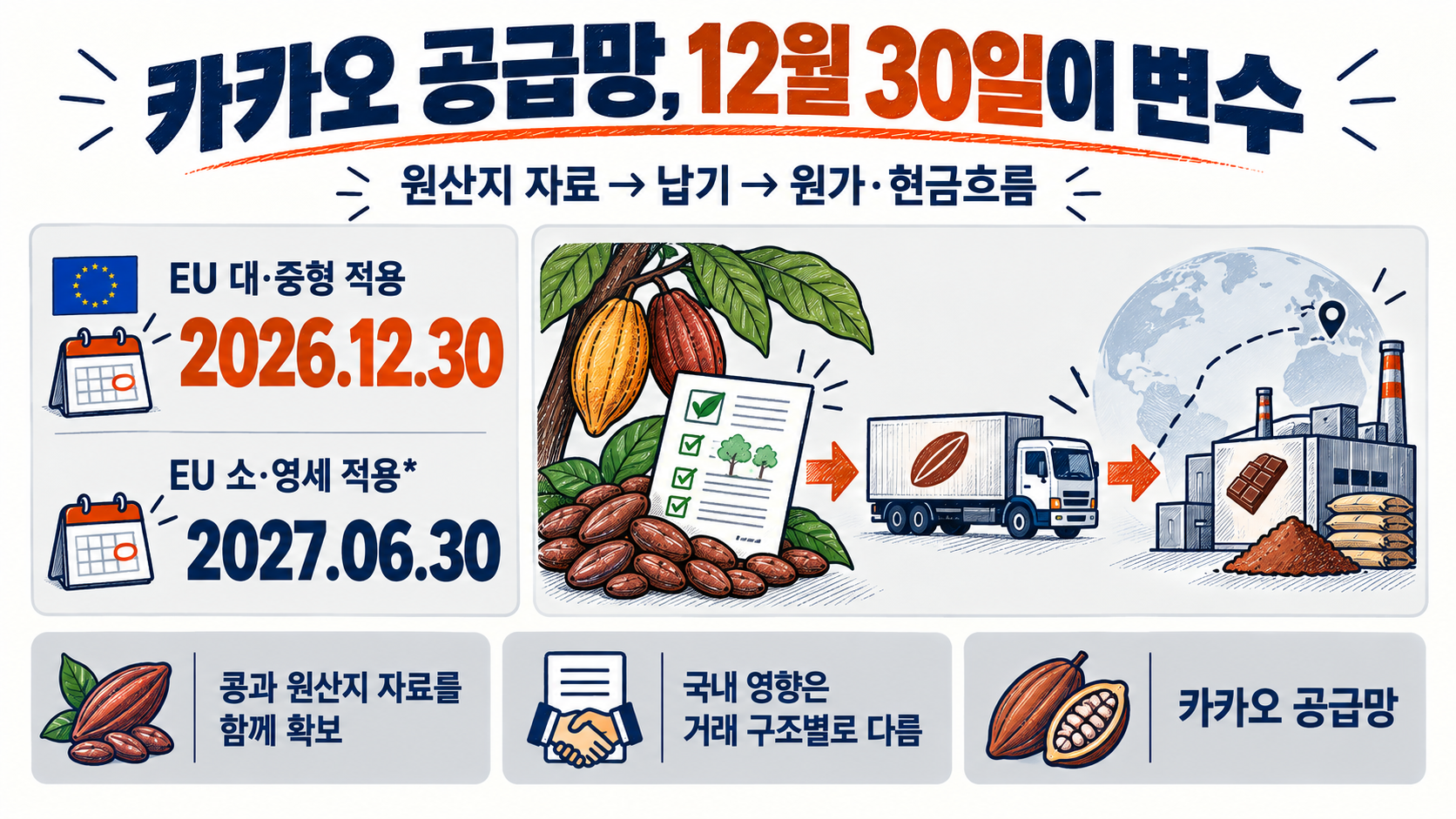
The cocoa supply chain faces a new source of cost. The EU deforestation regulation starts applying to large and medium operators on December 30, 2026. Buying ingredients for chocolate destined for Europe means securing beans and evidence of their origin together. Depending on sourcing arrangements, the cost of that preparation could also reach Korean manufacturers and shoppers.
Reuters reported on September 9 that Ivorian buyers faced difficulties with a new traceability system and equipment. Regulator CCC described the difficulties as not serious. This is a warning about delivery risk, not confirmation of a global shortage.
Why documentation matters to the cocoa supply chain
EUDR is intended to prevent EU consumption from encouraging the conversion of forests into agricultural land. Cocoa and chocolate are among the products covered. The European Commission explains the purpose and scope.
Traceability connects the beans purchased from farms with the material collected, transported, processed and eventually delivered. If records break when different lots are pooled, a buyer may struggle to establish the evidence it needs even when the beans are physically sound. Harvest volume and readily deliverable supply can therefore diverge.
The economic mechanism is extra time spent checking purchases. Buyers may favor suppliers with usable records or defer orders until checks are complete. Beans have not disappeared, but fewer lots may be available on the required schedule. The diagram shows a conditional mechanism, not a measured price increase.
How documentation delays affect procurement
Conditional analysisHow documentation delays affect procurement. Not a measurement of prices or supply losses.
Why costs can arise before December 30
The official dates are December 30, 2026 for large and medium operators, and June 30, 2027 for micro and small operators. Micro and small operators already covered by the EU Timber Regulation instead start on December 30, 2026. The Commission’s responsibilities page confirms this schedule. We use the official date rather than the January 1 wording in the field report.
Businesses do not normally buy beans and sell the finished chocolate on the same day. Ordering, shipping, processing and storage take time. A company preparing goods for the European market after the deadline has a reason to align procurement contracts and documentation earlier. Preparation costs can precede legal application.
This does not make every chocolate bar sold in Korea directly subject to EU obligations. Direct exposure depends on the product and the business’s role in supplying the EU market. Indirect exposure is different: shared suppliers may adjust delivery schedules or quotations when European buyers change their procurement requirements.
Cash flow can react before reported profit
Suppose a manufacturer buys ingredients early and pays suppliers sooner to guard against late deliveries. The extra inventory reduces the risk of interrupting production. It also leaves less cash available. Working capital is the money committed between buying inputs and collecting payment for the products sold.
Buying inventory does not normally turn the entire purchase into an immediate expense. The relevant cost enters profit as the products are sold. A quarter can therefore show resilient earnings alongside weaker operating cash flow. Longer holding periods also warrant attention to storage and financing costs.
For illustration, suppose cocoa-related ingredients represent 20% of a product’s cost. A 10% increase in their purchase price would raise total cost by roughly 2%, with everything else unchanged. These are hypothetical assumptions, not a Korean company estimate. Recipes, inventories and procurement contracts determine the actual result.
Two measures to watch when buying inventory early
Profit and cash flowProfit
Cash
Two measures to watch when buying inventory early. General mechanism, not a company forecast.
What this could mean for Korean chocolate prices and food stocks
The Korean implications here are conditional analysis. A buyer’s landed cost combines ingredient prices, exchange rates, freight and supplier charges. A weaker won can increase costs even without a change in the commodity price. Existing stocks and contracts with agreed prices can delay the impact on earnings.
If manufacturers absorb higher costs, profit per unit falls. If they raise prices, shoppers may switch to cheaper products or buy less often. Promotions, pack sizes and product mix offer other ways to respond. A higher shelf price does not by itself establish that a chocolate maker is earning more.
For food equities, revenue growth needs to be read alongside sales volume. Revenue lifted only by price increases is weak evidence of recovering consumption. Whether the cost outlook is already reflected in share prices is a separate question. This report alone cannot establish a direction or fair value for Korean food stocks.
For related transmission mechanisms, see our analysis of India’s GST and business margins and the gap between nominal GDP and real growth.
Who can produce the paperwork may decide who keeps the business
Traceability systems require organized transaction records and training for staff and suppliers. Some preparation costs arise even at low trading volumes. Larger suppliers can spread those costs across more units. Smaller suppliers may have an incentive to use shared systems or work with larger intermediaries.
Investment priorities may shift accordingly. Companies may need to fund data management and supplier support alongside processing equipment. Better-prepared suppliers could retain business while others lose opportunities despite having good beans. This is an inference from the cost structure, not a statistical finding that concentration has already increased.
Adequate stocks can cushion a supply shock. A Mondelez executive told Reuters on September 2 that healthy cocoa inventories could soften the impact of adverse weather on production. That was a corporate assessment of weather risk; it did not establish that those inventories had the records needed for EUDR compliance.
I would put more weight on whether inventory has the records needed for timely delivery than on assurances that stocks are ample.
Three things to watch after bean prices: deliveries, cash flow and sales volume
Watch whether purchasing and delivery delays ease, and whether documented supplies carry longer lead times or extra charges. In company results, read inventory movements, operating cash flow and sales volumes together. Quick adaptation and adequate stocks could limit cost pressure. Persistent delays could instead increase both procurement costs and funding needs.
Cocoa alone cannot explain Korean inflation or the economic cycle. It does illustrate why information that makes a transaction possible can matter alongside physical production. A manufacturer’s resilience depends on timely delivery and cash tied up in procurement as well as the price paid.
Sources checked as of September 16, 2026. Official dates, field reporting, corporate views and conditional analysis are distinguished throughout. This article is not a recommendation to buy or sell any asset.
Reliable deliveries and cash committed to procurement matter alongside the price of beans.
Sources
카카오 공급망에 새 변수 — 12월 30일 EU 규제와 초콜릿 원가 전달 구조 (조회수 1)
카카오 공급망에 새로운 비용이 붙을 수 있습니다. EU는 대·중형 사업자에 대한 산림전용방지규정을 2026년 12월 30일부터 적용합니다. 유럽에 공급할 초콜릿의 원료를 확보하려면 콩과 함께 원산지를 입증할 자료도 준비해야 합니다. 이 준비에 드는 비용은 거래 구조에 따라 한국 제과기업의 원가와 소비자가격에도 전달될 수 있습니다.
최근 신호는 코트디부아르에서 나왔습니다. 9월 9일 Reuters 현장 취재에 따르면 구매자들이 새 추적 시스템과 장비 준비에 어려움을 호소했습니다. 현지 규제기관 CCC는 어려움이 심각하지 않다고 설명했습니다. 납품 차질 위험을 다룬 보도이지, 세계적인 공급 부족이 확정됐다는 발표는 아닙니다.
카카오 공급망에 왜 원산지 자료가 중요해졌을까요?
산림전용은 숲을 농지 등 다른 용도로 바꾸는 일을 뜻합니다. EU의 산림전용방지규정, EUDR은 EU의 소비가 이런 산림 훼손을 부추기지 않도록 만든 제도입니다. 카카오와 초콜릿도 대상에 포함됩니다. 규제 목적과 범위는 EU 집행위원회 안내에서 확인할 수 있습니다.
원산지 추적은 농가에서 산 원료가 수집·운송·가공을 거쳐 어느 납품 물량이 됐는지 연결하는 작업입니다. 여러 농가의 콩을 모을 때 거래 기록이 끊기면, 원료의 품질이 좋아도 구매자가 필요한 증빙을 확인하기 어려워집니다. 수확량과 납품 가능한 물량이 달라질 수 있는 이유입니다.
경제적으로는 확인 작업에 드는 시간이 늘어난다는 뜻입니다. 구매자는 자료가 준비된 공급자를 먼저 찾거나, 확인이 끝날 때까지 주문을 늦출 수 있습니다. 이때 원료가 사라지는 것은 아니지만 제때 받을 수 있는 원료의 선택지가 줄어듭니다. 아래 흐름은 이런 조건에서 가능한 전달 과정이며, 이미 발생한 가격 상승을 측정한 그래프는 아닙니다.
자료 지연이 조달 부담으로 이어지는 경로
조건부 분석자료 지연이 조달 부담으로 이어지는 경로. 실제 가격 상승률이나 공급 감소량을 나타내지 않습니다.
12월 30일 전에 비용이 발생하는 이유
공식 일정은 대·중형 사업자 2026년 12월 30일, 소·영세 사업자 2027년 6월 30일입니다. 기존 EU 목재규정의 적용을 받는 소·영세 사업자는 예외적으로 2026년 12월 30일입니다. 사업자별 의무 안내에서도 같은 일정을 확인했습니다. 현장 기사에 나온 2027년 1월 1일이라는 표현 대신 공식 날짜를 기준으로 삼았습니다.
기업은 규제 적용일에 원료를 사서 그날 바로 제품을 판매하지 않습니다. 원료 주문과 운송, 가공, 재고 보관에 시간이 필요합니다. 연말 이후 유럽에 공급할 제품을 준비하는 회사라면, 그보다 앞서 구매계약과 자료 제출 방식을 맞출 이유가 있습니다. 법의 적용 시점보다 준비 비용이 먼저 나타날 수 있습니다.
한국에서 판매하는 모든 초콜릿에 EU 의무가 직접 붙는다는 뜻은 아닙니다. 직접적인 적용 여부는 EU 시장에 공급하는 상품과 거래상 지위에 따라 달라집니다. 다만 같은 원료 공급자를 이용한다면 유럽 구매자의 조달 변화가 다른 고객의 납기나 견적에도 영향을 줄 가능성은 있습니다. 직접적인 규제 의무와 간접적인 시장 영향을 구분해야 합니다.
제과업체는 손익계산서보다 통장에서 먼저 느낄 수 있습니다
기업이 납품 지연에 대비해 원료를 평소보다 일찍 사고 대금도 먼저 지급한다고 가정합니다. 재고를 확보하면 공장을 멈출 위험은 낮아집니다. 대신 쓸 수 있는 현금이 줄어듭니다. 원료를 사서 제품을 팔고 대금을 받기까지 묶이는 돈을 운전자금이라고 부릅니다.
재고 매입액이 그날 전부 비용으로 잡히는 것도 아닙니다. 보통 제품이 판매될 때 관련 원가가 손익에 반영됩니다. 그래서 분기 이익은 괜찮아 보여도 영업활동으로 들어오는 현금은 줄 수 있습니다. 재고 보유 기간이 길어지면 보관료와 자금 조달 부담도 따로 확인해야 합니다.
가령 한 제품의 원가에서 카카오 관련 원료가 20%를 차지한다고 가정합니다. 다른 조건이 같을 때 그 원료의 구입 단가가 10% 오르면 전체 원가는 단순 계산으로 약 2% 상승합니다. 구조를 설명하기 위한 가상 예시입니다. 국내 특정 회사의 원가율이나 전망이 아니며, 실제 영향은 배합·재고·구매계약에 따라 달라집니다.
재고를 미리 살 때 보는 두 숫자
회계·현금 흐름 비교손익
현금
재고를 미리 살 때 보는 두 숫자. 일반적인 전달 구조이며 개별 기업의 실적 예측이 아닙니다.
한국 초콜릿 가격과 식품주에는 어떻게 이어질까요?
이하 국내 영향은 조건부 분석입니다. 한국 업체의 부담은 국제 원료 가격에 원화 환율, 운임, 공급자의 추가 비용이 합쳐져 결정됩니다. 원료 가격이 그대로여도 원화가 약해지면 수입 부담이 커질 수 있습니다. 반대로 미리 가격을 정한 계약과 확보해 둔 재고는 충격이 당장 손익에 나타나는 것을 늦출 수 있습니다.
비용이 오를 때 기업이 판매가격을 그대로 유지하면 제품을 하나 팔아 남기는 돈이 줄어듭니다. 가격을 올리면 소비자가 더 싼 제품을 고르거나 구매 횟수를 줄일 수 있습니다. 기업은 할인 행사, 포장 크기, 제품 구성도 함께 조정할 수 있습니다. 따라서 초콜릿 가격 인상이 곧 제과업체의 이익 증가라는 계산은 성립하지 않습니다.
주식시장에서는 매출 증가율과 판매량을 함께 볼 필요가 있습니다. 가격 인상만으로 매출이 늘었다면 소비 회복으로 해석하기 어렵습니다. 원료비 변화가 이미 주가에 반영됐는지도 별개의 문제입니다. 이번 보도만으로 국내 식품주의 상승·하락 방향이나 적정 주가를 계산할 근거는 없습니다.
비용이 소비자가격에 전달되는 관점은 인도 GST와 소비·기업 수익성 글과 연결됩니다. 이익과 가계가 체감하는 경기가 다르게 움직이는 문제는 명목 GDP와 실질 성장의 차이에서도 다뤘습니다.
원산지 자료를 갖춘 공급자가 거래를 지키기 쉽습니다
추적 시스템을 도입하려면 거래 자료를 정리하고 직원과 협력사를 교육해야 합니다. 이런 준비에는 거래량이 작아도 드는 비용이 있습니다. 같은 비용을 더 많은 물량에 나눌 수 있는 큰 공급자는 단위당 부담을 낮추기 쉽습니다. 영세 공급자는 공동 시스템을 쓰거나 더 큰 유통업자와 협력할 유인이 생깁니다.
이 때문에 투자도 달라질 수 있습니다. 가공 설비를 늘리는 투자에 더해 데이터 관리와 공급자 지원에 돈을 써야 할 수 있습니다. 준비가 잘된 업체는 거래를 유지할 가능성이 높아지고, 준비가 늦은 업체는 좋은 원료를 보유해도 거래 기회를 놓칠 수 있습니다. 다만 이는 비용 구조에서 도출한 추론이며, 실제 시장 집중이 진행됐다는 통계는 아닙니다.
충분한 재고는 공급 충격을 줄이는 요인입니다. 9월 2일 Reuters에 소개된 Mondelez 임원의 평가도 재고가 악천후에 따른 카카오 생산 충격을 줄일 수 있다는 내용이었습니다. 다만 이 발언은 기상 위험에 관한 기업의 견해이며, 재고에 필요한 EUDR 증빙까지 갖춰졌다는 확인은 아닙니다.
저는 재고가 충분하다는 말만으로 안심하기보다, 그 재고가 필요한 서류를 갖추고 제때 납품될 수 있는지에 더 무게를 두겠습니다.
원료 가격 다음에 볼 세 가지: 납기·현금흐름·판매량
앞으로는 현지의 구매·배송 지연이 해소되는지, 규제 대응 자료를 갖춘 원료의 납기와 추가 비용이 어떻게 변하는지 확인해야 합니다. 국내 기업 실적에서는 재고가 늘어난 이유와 영업현금흐름, 판매량을 함께 읽는 편이 좋습니다. 준비가 빨라지고 재고가 충분하면 비용 압박이 제한될 수 있습니다. 지연이 길어지면 원가뿐 아니라 현금 확보 부담도 커질 수 있습니다.
카카오 하나로 한국 전체의 물가나 경기 방향을 설명할 수는 없습니다. 다만 이 사례는 원자재 시장에서 생산량만큼 거래를 가능하게 하는 정보도 중요해지고 있음을 보여줍니다. 제과기업의 회복력을 판단할 때는 싸게 샀는지뿐 아니라 제때 받는지, 그 과정에 현금이 얼마나 묶이는지를 살펴볼 필요가 있습니다.
자료 확인 기준: 2026년 9월 16일. 공식 규제 일정, 현장 보도, 기업 관계자 견해와 본문의 조건부 분석을 구분했습니다. 이 글은 특정 자산의 매수·매도를 권하는 투자 조언이 아닙니다.
원료를 제때 받는 능력과 그 과정에 묶이는 현금도 기업의 경쟁력입니다.
답글 남기기