일본 단칸 2026 — 제조업 24로 상승, 비제조업은 꺾여도 투자 15% 늘리는 이유Japan Tankan 2026 — Manufacturers Rise to 24 While Non-Manufacturers Still Plan 15% More Investment
일본 단칸 2026년 9월 조사에서는 공장과 내수기업의 표정이 갈렸습니다. 10월 1일 일본은행 발표에서 대기업 제조업의 체감경기 지수는 24로 올랐지만, 비제조업은 35로 내려갔습니다. 그런데 비제조업의 투자 계획은 여전히 늘어납니다. 이 엇갈림을 이해하면 한국 기업의 수주 기회와 엔화 투자에서 무엇을 따로 봐야 하는지 보입니다. 출처: 일본은행 — 2026년 9월 단칸 개요 (10월 1일)
Japan Tankan 2026 tells two different business stories. In the Bank of Japan’s October 1 release, large manufacturers became more optimistic while large non-manufacturers became less so. Yet non-manufacturers still plan to invest more. That apparent contradiction matters for Korean suppliers and for investors separating business performance from currency returns. Source: 일본은행 — 2026년 9월 단칸 개요 (10월 1일)
경기가 좋아야 투자를 늘린다는 설명만으로는 부족합니다. 사람을 구하지 못해 매장을 짧게 열거나 주문을 거절하는 회사라면, 매출 전망이 밝지 않아도 자동화에 돈을 써야 할 수 있습니다. 이번 단칸은 이런 투자의 필요성과 비싸지는 자금조달 비용을 함께 읽을 만한 자료입니다.
일본 단칸 24는 성장률 24%가 아닙니다
단칸은 기업에 경영 상황을 묻는 설문입니다. 여기서 업황 판단지수인 DI는 경기가 좋다는 응답 비중에서 나쁘다는 비중을 뺀 값입니다. 단위는 %포인트입니다. 공장 생산량이나 기업 이익이 그만큼 늘었다는 뜻은 아닙니다. 출처: 일본은행 — 2026년 9월 단칸 개요 (10월 1일)
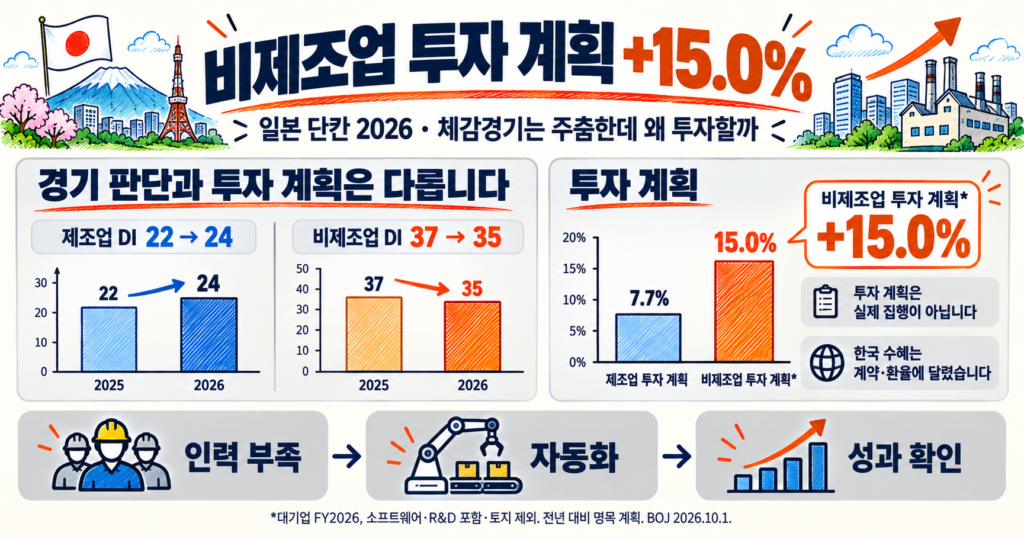
대기업 제조업은 6월 22에서 9월 24로, 비제조업은 37에서 35로 움직였습니다. 비제조업의 수준은 여전히 제조업보다 높습니다. 다만 이번 분기의 변화 방향이 반대입니다. 비제조업에는 소매·운수·숙박뿐 아니라 건설·부동산·전력 등도 들어가므로, 소비 서비스업 전체와 같은 말로 쓰면 범위가 어긋납니다. 출처: 일본은행 — 2026년 9월 단칸 개요 (10월 1일) 출처: 일본은행 — 9월 단칸 통계표·투자 정의 (10월 1일)
대기업 업황: 수준보다 방향의 차이. 일본은행, 2026년 10월 1일. 좋음 비중−나쁨 비중. 생산·이익 증가율이 아닙니다.
그래서 이번 발표를 일본 경제 전체의 호황이나 침체로 한데 묶기는 어렵습니다. 기업이 누구에게 팔고, 원가 상승을 가격에 얼마나 반영할 수 있는지가 더 중요합니다. 같은 나라에 있어도 거래 상대가 세계의 설비투자 기업인지, 생활비를 아끼는 가계인지에 따라 결과가 달라집니다.
공장은 주문을 받고, 내수기업은 가격 저항을 받습니다
Reuters는 10월 1일 보도에서 AI 관련 수요와 비용의 판매가격 반영이 제조업을 지지했다고 설명했습니다. 반면 서비스업은 원재료·임금 부담, 가격 인상에 대한 소비자 저항, 악천후의 영향을 받았다고 전했습니다. 이는 취재를 통해 제시한 배경 설명이며, 지수만으로 각 요인의 기여도를 계산할 수는 없습니다. 출처: Reuters — 일본 제조업과 비제조업 경기 판단의 엇갈림 (10월 1일, Investing.com 전재)
이 차이는 기업의 손익계산서에서 더 선명해집니다. 대체하기 어려운 부품을 파는 회사는 가격을 올려도 주문을 지킬 여지가 있습니다. 식당이나 소매점은 가격을 올린 뒤 방문 횟수와 구매량이 줄 수 있습니다. 매출액이 늘어도 재료비와 임금이 더 빨리 오르면 남는 돈은 줄어듭니다.
엔저도 이 차이를 키울 수 있습니다. 히미노 료조 일본은행 부총재는 8월 27일 연설에서 엔저가 글로벌 기업 이익에는 유리하지만, 수입물가를 통해 가계의 실질소득과 중소기업 수익을 압박한다고 설명했습니다. 해외에서 번 돈을 엔화로 바꿀 때 생기는 이익과, 수입품을 살 때 더 내는 비용이 동시에 존재하는 셈입니다. 출처: 히미노 부총재 — 사이타마 연설 (8월 27일)
체감경기는 주춤한데 투자는 왜 늘릴까요?
투자 항목을 열어보면 흥미로운 차이가 있습니다. 토지 구입을 빼고 소프트웨어·연구개발을 포함한 대기업의 2026회계연도 투자 계획은 전년보다 제조업 7.7%, 비제조업 15.0% 증가입니다. 2026회계연도는 2026년 4월부터 2027년 3월까지입니다. 이 수치는 돈으로 표시한 계획이며, 이미 집행한 투자나 실제 설비 대수의 증가율이 아닙니다. 출처: 일본은행 — 9월 단칸 통계표·투자 정의 (10월 1일)
체감경기가 약해져도 남아 있는 투자 계획. 소프트웨어·R&D 포함, 토지 제외. 명목 계획이며 실현치가 아닙니다. BOJ 9월 단칸 표 4.
여기서 전체 증가율은 11.0%입니다. 기사에서 자주 쓰는 토지 포함·소프트웨어와 연구개발 제외 기준의 11.3%와는 집계 범위가 다릅니다. 두 수치를 바꿔 쓰거나 차액을 곧바로 소프트웨어 투자액으로 해석해서는 안 됩니다. 두 기준은 포함하고 제외하는 항목이 서로 다릅니다. 출처: 일본은행 — 9월 단칸 통계표·투자 정의 (10월 1일)
이 글에서 주목하는 설명은 인력 부족입니다. 단칸의 전 산업 고용인원 판단 DI는 -38입니다. 이 항목은 인원이 남는다는 비중에서 부족하다는 비중을 빼므로, 음수는 부족하다는 응답이 더 많다는 뜻입니다. 실업률이나 빈 일자리 비율을 뜻하지는 않습니다. 출처: 일본은행 — 2026년 9월 단칸 개요 (10월 1일)
예를 들어 물류회사는 수요가 폭발하지 않아도 분류 설비를 바꿀 이유가 있습니다. 필요한 직원을 계속 뽑지 못한다면 기존 주문조차 처리하기 어렵기 때문입니다. 예약·결제 소프트웨어도 비슷합니다. 직원을 무조건 줄이려는 투자만 있는 것이 아니라, 구하지 못하는 인력을 대신해 영업을 유지하려는 투자도 가능합니다.
-
1
채용의 어려움
기존 주문·영업시간 유지에 제약
-
2
자동화·업무 전산화
사람이 못 채우는 업무를 설비로 보완
-
3
비용과 성과 확인
절감한 비용과 이자·유지비를 비교
다만 이것은 단칸 수치를 연결한 경제적 해석입니다. 설문만으로 투자 증가분이 전부 자동화 때문이라고 확인할 수는 없습니다. 건설비 상승이나 이미 진행 중인 프로젝트도 금액을 늘릴 수 있습니다. 또 임금을 아끼는 효과가 있어도 유지보수료·소프트웨어 이용료·이자가 더 들면 투자 효과는 작아집니다. 비용을 실제로 얼마나 줄였는지가 다음 실적의 질문입니다.
일본은행 금리 1.25%: 돈은 비싸졌지만 빌릴 길은 열려 있습니다
일본은행은 9월 18일 정책금리를 1.25%로 정하고 9월 24일부터 적용했습니다. 같은 성명에서 적극적인 은행 대출태도와 양호한 기업어음·회사채 발행 여건을 설명했습니다. 기업어음과 회사채는 기업이 투자자에게 직접 돈을 빌리는 방식입니다. 금리가 오른다는 것과 돈을 아예 빌리기 어려워진다는 것은 다른 문제입니다. 출처: 일본은행 — 금융시장조절 방침 변경 (9월 18일)
우에다 가즈오 총재는 9월 18일 기자회견에서 기조적 물가가 2%에 접근하면서 과도한 상승을 막는 정책 국면으로 옮겨갔다고 설명했습니다. 회견록은 9월 24일 공개됐습니다. 기업투자가 버틴다는 이유만으로 금리 인상이 끝났다고 보기도, 다음 회의의 인상을 확정하기도 어렵습니다. 총재가 제시한 판단 기준은 경제·물가 전망과 위험입니다. 출처: 우에다 총재 — 9월 18일 기자회견 (9월 24일 공개)
IMF도 4월 일본 연례협의 평가에서 점진적 금리 정상화를 지지하되, 불확실성에 유연하게 대응할 것을 주문했습니다. 이는 10월 단칸에 대한 새 논평이 아니라 정책을 읽는 배경입니다. 임금 상승이 소비를 받치고 투자가 생산성을 높이면 정상화의 부담을 흡수할 여지가 생깁니다. 반대로 비용만 오르고 판매량이 줄면 같은 금리도 더 버겁게 느껴집니다. 출처: IMF — 일본 Article IV 이사회 평가 (4월 3일)
조사 시점도 조심해서 읽어야 합니다. Reuters에 따르면 응답기업의 약 70%는 9월 9일까지 답했습니다. 따라서 이번 단칸으로 9월 금리 인상 뒤 기업이 충분히 적응했다고 단정할 수 없습니다. 이미 발표된 정책과, 그 정책이 실적에 반영되는 시간 사이에는 간격이 있습니다. 출처: Reuters — 일본 제조업과 비제조업 경기 판단의 엇갈림 (10월 1일, Investing.com 전재)
한국 기업에는 일본 투자 예산보다 계약 내용이 중요합니다
일본의 자동화·디지털 투자가 늘면 한국의 공장 부품, 제어장치, 기업용 소프트웨어 공급사에도 기회가 생길 수 있습니다. 그러나 단칸은 한국산 구매 비중을 알려주지 않습니다. 현지 고객의 인증, 기존 시스템과의 연결, 설치 뒤 유지보수까지 통과해야 투자 계획이 한국 기업 매출로 바뀝니다.
수주 공시와 현금 유입도 같은 날 일어나지 않습니다. 장비를 먼저 제작하고 설치·검수를 거쳐 잔금을 받는 계약이라면, 매출이 늘기 전에 재고와 외상대금이 늘 수 있습니다. 수주잔고가 증가할 때 영업현금흐름도 함께 보는 이유입니다. 이는 계약 구조에 따른 가능성이지, 특정 한국 기업에 이미 발생했다고 확인한 사실은 아닙니다.
앞서 다룬 한국 수출의 업종별 격차와도 맞물립니다. 거시 숫자가 좋아져도 모든 공급사의 이익이 늘지는 않습니다. 이번에는 일본 고객이 예산을 실제로 집행하는지, 한국 공급사가 이익을 남길 가격과 조건으로 계약하는지가 관건입니다.
환율은 계약의 효과를 다시 바꿉니다. 엔화가 원화에 대해 강해지면 엔화 매출을 원화로 바꾸는 공급사에는 유리할 수 있습니다. 반대로 일본 장비를 엔화로 사는 기업의 부담은 커질 수 있습니다. 미리 환율을 정해두는 계약, 일본 현지 생산, 달러 결제 비중에 따라 실제 영향은 달라집니다. 원달러 환율을 다룬 글과 함께 읽되, 이번 거래에서는 원엔 환율도 별도로 확인해야 합니다.
엔화 매출을 받는 공급사
원화 환산 매출 증가
가능한 효과
확인할 조건 · 헤지·현지 비용·결제통화
일본 장비를 사는 기업
엔화 구매대금의 원화 부담 증가
가능한 효과
확인할 조건 · 선결제·고정환율 계약 여부
좋은 투자 계획이 곧 주가 상승은 아닙니다
주식시장은 투자 증가만 보지 않습니다. 투자로 벌 돈이 얼마나 되는지, 그 돈이 들어올 때까지 얼마나 기다려야 하는지, 그동안 이자를 얼마나 내는지도 가격에 반영합니다. 자동화 수주가 늘어도 이익률이 낮거나 기대가 이미 주가에 들어 있다면 주가 반응은 약할 수 있습니다.
시장 심리 지표에서도 온도 차이가 보입니다. 미국 CNN 공포·탐욕 지수는 10월 2일 31.2로 공포 구간이며, 1주 전 36.9보다 5.8포인트, 1개월 전 46.1보다 14.9포인트 낮습니다. 반면 GoldKimp의 한국 KOSPI 지수는 10월 1일 60.5로 탐욕 구간입니다. 산식이 달라 두 점수를 같은 척도로 빼서 비교할 수는 없으며, 한국의 같은 방식 과거치가 없어 주간·월간 방향은 판단하지 않았습니다. 출처: CNN Fear & Greed — 10월 2일 제공 스냅샷 출처: GoldKimp KOSPI Fear & Greed — 10월 1일 제공 스냅샷
SentimenTrader의 Smart Money·Dumb Money 개별 최신 수치는 공개 페이지에 나오지 않습니다. 확인 가능한 9월 22일 공개 요약은 두 지수의 차이인 스프레드가 큰 음수에서 0 위로 돌아왔다고 설명합니다. 이는 당시의 상대적 심리 신호일 뿐, 10월 현재의 개별 지수나 기관·개인의 실제 순매수액을 뜻하지 않습니다. 출처: SentimenTrader — 공개 홈페이지 (10월 4일 확인, 개별 지수 미표시) 출처: SentimenTrader·Jay Kaeppel — Smart/Dumb Money 스프레드 (9월 22일)
이런 차이는 일본 투자 호재를 한국 주식의 일괄 매수 근거로 옮기기 어렵다는 점을 보여줍니다. 미국의 위험 회피가 강해지면 주문 전망과 별개로 주식에 요구하는 수익률이 높아져 가격을 누를 수 있습니다. 엔화로 투자하는 한국 독자라면 일본 자산 가격 변화와 원화 환산 효과도 나눠 봐야 합니다. 일본은행이 금리를 올린다고 엔화 강세가 자동으로 보장되지는 않습니다.
다음 실적에서 확인할 것은 투자액의 크기보다 성과입니다
앞으로의 분기점은 기업이 계획한 돈을 쓰는지, 그리고 그 지출이 비용 절감이나 매출로 돌아오는지입니다. 자동화가 인력 부족을 메우고 직원 한 명이 처리하는 일을 늘리면 임금과 이익을 함께 지킬 여지가 생깁니다. 반대로 설치 지연과 높은 유지비가 겹치면 투자액만 늘고 수익성은 개선되지 않을 수 있습니다.
- 일본 고객의 투자 집행: 계획 발표 이후 발주·설치·검수가 실제로 이어지는지 확인합니다.
- 공급사의 현금 회수: 수주잔고와 함께 재고·외상대금·영업현금흐름을 봅니다.
- 내수의 부담: 가격 인상 뒤 판매량과 실질임금이 소비를 지탱하는지 살핍니다.
이번 단칸에서 더 오래 볼 대목은 제조업 지수의 상승 폭보다, 사람이 부족한 경제에서 기업이 어떤 지출을 포기하기 어려워지는가입니다. 한국 기업의 기회도 그 지출을 실제 주문과 현금으로 연결할 능력에 달려 있습니다. 이 글의 산업·환율 파급은 조건부 분석이며 특정 자산의 매수·매도 권유가 아닙니다.
출처와 참고자료
- 일본은행 — 2026년 9월 단칸 개요 (10월 1일)
- 일본은행 — 9월 단칸 통계표·투자 정의 (10월 1일)
- Reuters — 일본 제조업과 비제조업 경기 판단의 엇갈림 (10월 1일, Investing.com 전재)
- 우에다 총재 — 9월 18일 기자회견 (9월 24일 공개)
- 히미노 부총재 — 사이타마 연설 (8월 27일)
- 일본은행 — 금융시장조절 방침 변경 (9월 18일)
- IMF — 일본 Article IV 이사회 평가 (4월 3일)
- CNN Fear & Greed — 10월 2일 기준
- GoldKimp KOSPI Fear & Greed — 10월 1일 기준
- SentimenTrader — 공개 홈페이지 (10월 4일 확인, 개별 지수 미표시)
- SentimenTrader·Jay Kaeppel — Smart/Dumb Money 스프레드 (9월 22일)
Investment is not always a vote of confidence in stronger sales. A company that cannot staff its shops or fulfil orders may need automation even with a subdued sales outlook. The survey helps frame the tension between that need and the rising cost of financing it.
Japan Tankan: a reading of 24 is not 24% growth
Tankan is a survey of business conditions. Its business-conditions diffusion index, or DI, subtracts the share of respondents reporting unfavourable conditions from the share reporting favourable conditions. It is measured in percentage points, not growth in output or profit. Source: 일본은행 — 2026년 9월 단칸 개요 (10월 1일)
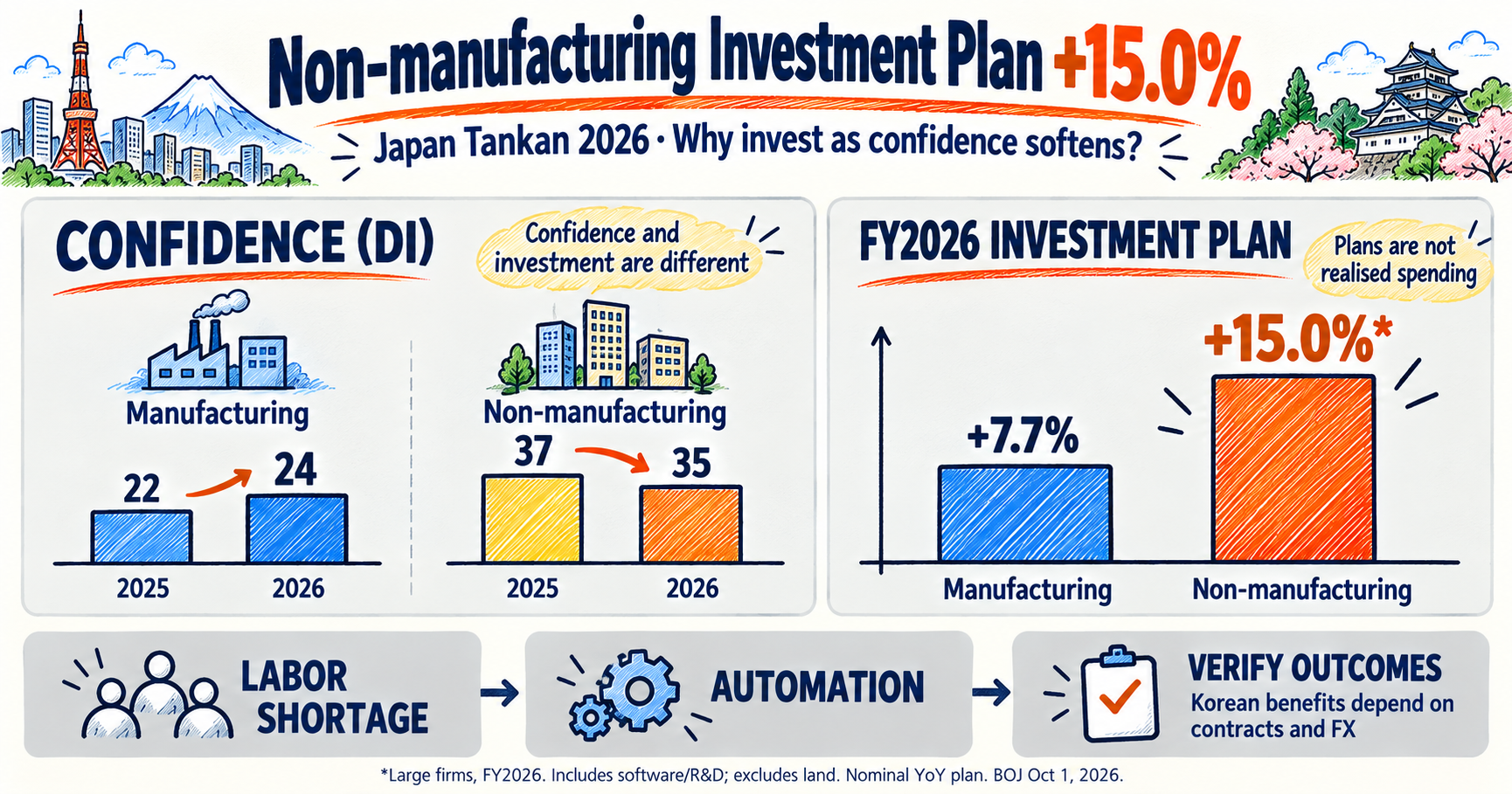
Large manufacturers rose from 22 in June to 24 in September; large non-manufacturers fell from 37 to 35. Non-manufacturing remains higher in level, but its direction has weakened. The category includes construction, real estate and utilities as well as retail, transport and hospitality; it is broader than consumer services. Source: 일본은행 — 2026년 9월 단칸 개요 (10월 1일) Source: 일본은행 — 9월 단칸 통계표·투자 정의 (10월 1일)
Large-firm business conditions. BOJ, Oct 1, 2026. Favourable minus unfavourable responses, not output or profit growth.
The release does not describe a uniform boom or slump. The more useful distinction is who buys the product and how much of a cost increase the seller can pass through. A supplier to global investment projects faces a different customer from a business serving households under budget pressure.
Factories find orders; domestic businesses face price resistance
Reuters reported on October 1 that AI-related demand and passing costs into selling prices helped manufacturers. Services faced material and labour costs, customer resistance to price increases and adverse weather. These are reported explanations, not a statistical decomposition of the DI movement. Source: Reuters — 일본 제조업과 비제조업 경기 판단의 엇갈림 (10월 1일, Investing.com 전재)
The distinction matters on the income statement. A supplier of a difficult-to-replace component may retain orders after raising prices. A restaurant or retailer can instead lose visits and purchase volumes. Higher revenue does not ensure higher earnings when payroll and material costs rise faster.
A weaker yen can widen that divide. In an August 27 speech, BOJ Deputy Governor Ryozo Himino explained that yen depreciation benefits global corporate earnings but squeezes household purchasing power and smaller businesses through import prices. Better currency translation for overseas earnings can coexist with a larger import bill. Source: 히미노 부총재 — 사이타마 연설 (8월 27일)
Why invest more when business confidence softens?
Consider large firms’ FY2026 investment plans including software and R&D but excluding land purchases: manufacturing plans a 7.7% increase and non-manufacturing 15.0%. The fiscal year runs from April 2026 to March 2027. These are planned nominal expenditures, not completed projects or growth in equipment quantities. Source: 일본은행 — 9월 단칸 통계표·투자 정의 (10월 1일)
Investment plans despite softer confidence. Includes software and R&D; excludes land. Nominal plans, not realised investment. BOJ September Tankan, table 4.
The all-industry total on that basis is 11.0%. It differs from the 11.3% measure that includes land but excludes software and R&D. They are different definitions; neither can replace the other, and their difference is not a measure of software spending. Source: 일본은행 — 9월 단칸 통계표·투자 정의 (10월 1일)
Labour scarcity offers an important explanation to examine. The all-industry employment DI is -38, calculated as excess employment minus insufficient employment. A negative reading means more respondents report a shortage. It is neither an unemployment rate nor a vacancy rate. Source: 일본은행 — 2026년 9월 단칸 개요 (10월 1일)
A logistics operator need not expect a demand boom to upgrade sorting equipment. Persistent recruitment difficulties can prevent it from processing existing orders. Booking and payment software can serve a similar purpose. Automation may preserve operations when staff cannot be found, rather than simply remove existing jobs.
-
1
Recruitment difficulty
Existing orders and opening hours face limits
-
2
Automation and software
Equipment supplements tasks that cannot be staffed
-
3
Check costs and results
Compare savings with interest and maintenance
This is an economic interpretation, not proof that automation explains the entire increase. Construction inflation and projects already underway can also lift spending. Even labour-saving equipment brings maintenance, software and financing costs. The next earnings question is how much the project actually reduces total operating costs.
BOJ at 1.25%: borrowing costs more, but credit is still open
The BOJ set its policy rate at 1.25% on September 18, effective September 24. Its statement also described supportive bank lending and favourable conditions for issuing commercial paper and corporate bonds—ways for companies to borrow directly from investors. More expensive borrowing and unavailable borrowing are different constraints. Source: 일본은행 — 금융시장조절 방침 변경 (9월 18일)
At his September 18 press conference, published September 24, Governor Kazuo Ueda described a shift toward preventing inflation from overshooting as underlying inflation approached 2%. Resilient investment alone establishes neither the end of tightening nor a guaranteed hike at the next meeting. His stated criteria were the economic and inflation outlook and its risks. Source: 우에다 총재 — 9월 18일 기자회견 (9월 24일 공개)
In its April Japan consultation assessment, the IMF supported gradual monetary normalisation with flexibility under uncertainty. That is policy background, not a new response to October’s Tankan. Rising wages that support spending, and investment that improves productivity, can help businesses absorb tighter conditions. The same interest rate becomes harder to bear when costs rise but sales volumes fall. Source: IMF — 일본 Article IV 이사회 평가 (4월 3일)
Survey timing also matters. Reuters reported that roughly 70% of firms had responded by September 9. This is therefore not a complete test of how businesses adapted to September’s rate increase. A policy announcement and its effect on earnings arrive on different schedules. Source: Reuters — 일본 제조업과 비제조업 경기 판단의 엇갈림 (10월 1일, Investing.com 전재)
For Korean suppliers, the contract matters more than the budget
More Japanese automation and digital spending could create opportunities for Korean component, control-system and enterprise-software suppliers. Tankan does not identify the Korean share of procurement. Certification, integration with existing systems and local maintenance support stand between a customer’s investment budget and a supplier’s revenue.
An order announcement and cash collection need not occur together. A contract paid after manufacturing, installation and acceptance can increase inventories and receivables before it produces cash. That is why a rising order backlog should be read alongside operating cash flow. This is a contract-dependent mechanism, not a reported outcome at a named Korean company.
This connects with our earlier discussion of differences across Korean export industries. Better aggregate numbers do not lift every supplier’s earnings. Here, the key questions are whether Japanese customers execute their budgets and whether Korean suppliers win contracts with profitable terms.
Currency moves change those contract economics. A stronger yen against the won can help a supplier converting yen receipts into won, while raising the cost of Japanese equipment purchased in yen. Currency hedges, local production and dollar invoicing alter the result. Our earlier won-dollar discussion provides context, but these transactions also require a separate look at the won-yen rate.
Supplier receiving yen
Higher won value of revenue
Possible effect
Condition to check · Hedges, local costs and invoice currency
Buyer of Japanese equipment
Higher won cost of yen payments
Possible effect
Condition to check · Prepayments and fixed exchange rates
An investment plan is not a stock-price forecast
Equity markets also ask how much a project earns, how long that takes and what financing costs accumulate along the way. More automation orders can coexist with a muted share-price response if margins are thin or expectations are already reflected in the valuation.
Market sentiment gauges show a similar contrast. CNN’s US Fear & Greed index was 31.2, in fear, on October 2—down 5.8 points from 36.9 a week earlier and 14.9 from 46.1 a month earlier. GoldKimp’s KOSPI measure was 60.5, in greed, on October 1. Their different methodologies prevent a direct score-gap comparison. Comparable Korean history was unavailable, so no weekly or monthly direction is inferred. Source: CNN Fear & Greed — 10월 2일 제공 스냅샷 Source: GoldKimp KOSPI Fear & Greed — 10월 1일 제공 스냅샷
SentimenTrader’s public pages do not show the latest individual Smart Money and Dumb Money readings. Its accessible September 22 summary said their spread had recovered from a deeply negative reading to above zero. That is a dated relative-sentiment signal, not either current index value or a measure of institutional and retail net purchases. Source: SentimenTrader — 공개 홈페이지 (10월 4일 확인, 개별 지수 미표시) Source: SentimenTrader·Jay Kaeppel — Smart/Dumb Money 스프레드 (9월 22일)
These differences make Japanese investment plans a poor basis for a blanket call on Korean equities. Greater US risk aversion can raise required equity returns and weigh on valuations independently of orders. Korean investors in yen assets must also separate the local asset return from currency translation. BOJ tightening alone does not guarantee a stronger yen.
What to check when plans become earnings
The next test is whether planned spending happens and then translates into lower costs or higher sales. Automation that fills staffing gaps and raises output per worker can support both wages and profits. Delays and expensive maintenance can instead leave companies with a larger capital bill and little improvement in profitability.
- Japanese customer execution: follow budgets through orders, installation and acceptance.
- Supplier cash collection: read backlogs alongside inventories, receivables and operating cash flow.
- Domestic demand: check sales volumes after price increases and whether real wages support consumption.
The lasting question in this Tankan is which investments companies cannot easily postpone in a labour-constrained economy. Korean suppliers benefit only if they can turn those budgets into orders and cash. The industry and currency implications here are conditional analysis, not a recommendation to buy or sell an asset.
Sources and references
- 일본은행 — 2026년 9월 단칸 개요 (10월 1일)
- 일본은행 — 9월 단칸 통계표·투자 정의 (10월 1일)
- Reuters — 일본 제조업과 비제조업 경기 판단의 엇갈림 (10월 1일, Investing.com 전재)
- 우에다 총재 — 9월 18일 기자회견 (9월 24일 공개)
- 히미노 부총재 — 사이타마 연설 (8월 27일)
- 일본은행 — 금융시장조절 방침 변경 (9월 18일)
- IMF — 일본 Article IV 이사회 평가 (4월 3일)
- CNN Fear & Greed — 10월 2일 기준
- GoldKimp KOSPI Fear & Greed — 10월 1일 기준
- SentimenTrader — 공개 홈페이지 (10월 4일 확인, 개별 지수 미표시)
- SentimenTrader·Jay Kaeppel — Smart/Dumb Money 스프레드 (9월 22일)
이 글은 정보 제공 목적이며, 특정 자산의 매수·매도를 권유하지 않습니다.
For information only — this is not a recommendation to buy or sell any asset.
댓글Comments 0