PFAS 분해 기술 — 예일팀의 72시간 실험, 정수 폐기물 비용을 바꿀까PFAS destruction — could Yale’s 72-hour experiment change water-treatment waste costs?
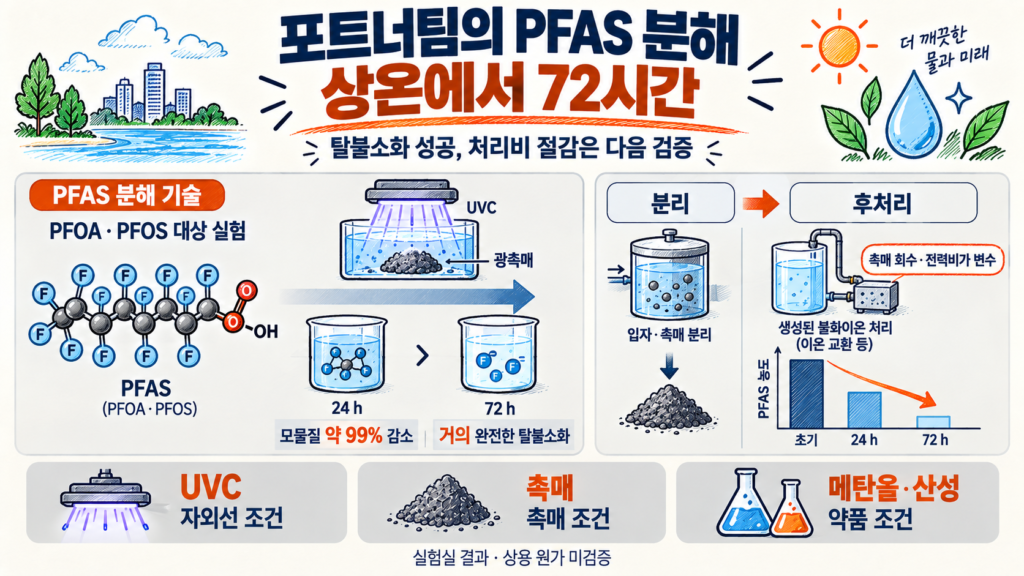
예일대 존 D. 포트너(John D. Fortner) 교수팀이 PFAS 분해 기술의 새 가능성을 보여줬습니다. 9월 1일 Nature Water에 발표한 연구에서, 상온의 물에 자외선과 촉매를 적용해 대표 오염물질의 불소를 72시간 안에 거의 모두 떼어냈습니다. 정수장에서 걸러낸 뒤에도 남는 폐기물 처리비를 얼마나 바꿀 수 있는지가 이 글의 질문입니다. 출처: Nature Water · 2026-09-01
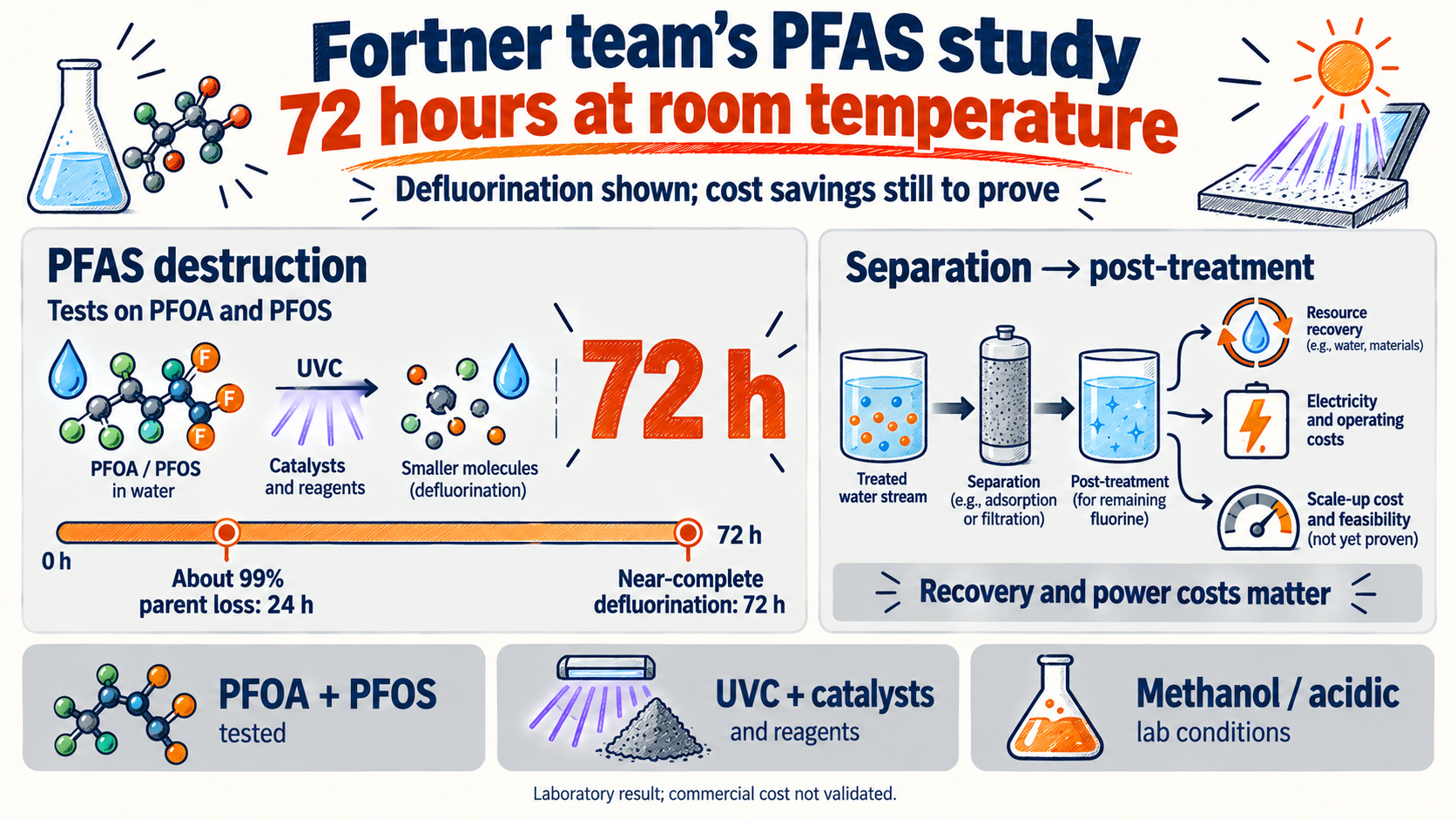
Yale professor John D. Fortner and colleagues have reported a new approach to PFAS destruction. Their September 1 Nature Water paper describes near-complete fluoride release from two target compounds within 72 hours at room temperature. The economic question is what this could change about the waste left after water treatment. Source: Nature Water · 2026-09-01
물에서 오염물질을 잡아냈다고 비용이 끝나지는 않습니다. 오염물질을 붙잡은 필터나 농축액은 따로 관리해야 합니다. 포트너팀의 연구가 흥미로운 이유도 이 뒷단에 있습니다. 다만 실험실의 반응 성공과 현장의 처리 단가는 별개의 문제입니다.
포트너팀 — 흡착 연구에서 분해 반응까지
포트너는 교신저자로 연구를 총괄했습니다. 공동 제1저자 외즈제 두라크(Ozce Durak)와 승수 리(Seung Soo S. Lee)는 연구 구상과 실험 방법, 데이터 분석을 맡았습니다. 논문은 두 사람의 동등한 기여를 명시합니다. 출처: 논문 · 저자 기여
예일대 화학과 제임스 M. 메이어(James M. Mayer)는 반응 메커니즘 분석에 참여했습니다. 광주과학기술원 김창우(Changwoo Kim)는 연구 지도와 검토에 기여했습니다. 누가 어떤 일을 했는지 보면, 이 연구는 새 소재를 만드는 작업과 그 소재가 실제로 무엇을 하는지 밝히는 작업이 함께 진행됐음을 알 수 있습니다. 출처: 논문 · 소속 및 기여
이 연구실은 이전부터 PFAS가 다공성 표면에 어떻게 달라붙는지 연구해 왔습니다. 연구실의 2026년 논문 목록에는 아민기를 붙인 소재의 기공 크기와 PFAS 흡착을 다룬 작업이 있습니다. 오염물질을 표면 가까이에 모으는 지식이 이번에는 화학반응을 일으키는 설계로 이어진 셈입니다. 출처: Fortner Lab · Publications
PFAS 분해 기술, 필터와 무엇이 다를까
PFAS는 탄소와 불소가 결합한 합성 화학물질군입니다. 물이나 기름을 잘 튕겨내는 성질 때문에 활용됐지만, 처리 과정에서는 잘 끊어지지 않는 결합이 문제가 됩니다. 여기서 흡착은 물질을 표면에 붙잡는 일이고, 탈불소화는 분자에서 불소를 떼어내는 일입니다. 두라크와 리의 연구를 읽을 때 먼저 구별해야 할 부분입니다.
미국 환경보호청(EPA)이 소개하는 기존 방법에는 활성탄, 이온교환 수지, 고압막이 있습니다. 활성탄과 수지는 PFAS를 붙잡고, 막은 물과 오염물질을 갈라놓습니다. 깨끗해진 물을 얻는 데 유용하지만, 붙잡거나 농축한 PFAS의 최종 처리는 남습니다. 출처: EPA · PFAS 수처리 기술
기존 분리 공정
흡착·막으로 물에서 분리
역할
남는 과제 · 필터·농축 잔류물 관리
이번 광촉매 연구
빛과 촉매로 탈불소화
역할
남는 과제 · 현장 처리량·회수·검증
두라크와 리는 작은 구멍이 많은 실리카에 팔라듐 또는 백금 촉매를 붙였습니다. 빛이 금속의 전자를 들뜨게 하고, 반응성이 큰 전자가 탄소–불소 결합을 끊는 데 관여한다는 설명입니다. 연구진은 반응 현장에서 생기는 수소의 역할도 제안했습니다. 물 전체를 뜨겁게 가열하지 않고 반응을 유도한다는 점이 공학적으로 관심을 끕니다. 출처: Nature Water · 반응 원리
이 차이가 곧 필터의 퇴장을 뜻하지는 않습니다. 물을 먼저 정화하고, 분리된 오염물질을 적은 부피에 모아 따로 처리하는 방식도 가능합니다. 그런 조합이 경제적일지는 농축에 드는 비용과 이후 분해에 드는 비용을 함께 계산해야 알 수 있습니다. 이는 논문의 실증 결과가 아니라 공정 설계 관점의 해석입니다.
72시간의 의미: 사라진 분자와 끊어진 결합
포트너팀은 대표 PFAS인 PFOA와 PFOS를 시험했습니다. 최적화한 UVC 조건에서 원래 분자는 24시간 후 약 99% 줄었고, 불소 이온 방출로 확인한 탈불소화는 72시간 안에 거의 100%에 도달했습니다. 서로 다른 지표를 측정한 결과입니다. 출처: Nature Water · Fig. 2
최적화 UVC·PFOA/PFOS 실험. 서로 다른 지표이며 처리속도 3배 비교가 아닙니다. 메탄올·산성 조건 포함. 출처: Nature Water Fig. 2.
원래 분자가 사라지면 처리가 끝난 걸까요? 농도만 재면 중간 생성물로 바뀐 것도 사라진 것으로 보일 수 있습니다. 그래서 불소가 어디로 갔는지 확인해야 합니다. 포트너팀의 결과를 모든 PFAS의 완전한 무해화로 읽어서는 안 되는 이유입니다. 처리 후 남은 물과 부산물의 성질은 따로 평가해야 합니다.
실험에는 메탄올과 이산화탄소를 이용한 산성 조건이 포함됐습니다. 외부 수소 공급이 없었다는 말은 약품이나 에너지가 필요 없다는 뜻이 아닙니다. 또 실험 조건의 메탄올 투입량 표기가 본문·그림과 Methods 사이에 달라, 이 글에서는 약품비를 수치로 추산하지 않았습니다. 출처: 논문 · Results 및 Methods
상온인데도 처리비가 비쌀 수 있는 이유
사실 포트너팀의 성과를 설비에 옮긴다고 가정하면, 상온이라는 조건만으로는 비용을 판단하기 어렵습니다. 가열 부담을 줄여도 조명을 켜 두는 전기와 반응조 공간은 필요합니다. 같은 양의 물을 얼마나 빨리 처리할 수 있을까요? 물을 오래 붙잡아 둘수록 필요한 설비 규모도 커집니다.
규모 감각만 보기 위해 시간당 1m³를 72시간 머물게 한다고 가정하면, 유량에 시간을 곱한 액체 보유량은 72m³입니다. 이는 상용 장치의 설계값이 아닙니다. 빛이 물속으로 들어가는 깊이, 섞이는 방식, 실제 반응속도를 무시한 단순 계산입니다. 그래도 반응 시간을 비용과 연결해서 봐야 하는 이유는 드러납니다.
촉매는 얼마나 오래 쓸 수 있을까요? 팔라듐과 백금의 구매비에 더해 회수율과 수명이 비용을 좌우합니다. 처리수가 빠져나갈 때 촉매도 함께 잃으면 보충 비용과 금속 유출 관리가 동시에 생깁니다. 촉매를 단단히 고정하면 회수는 쉬워질 수 있지만 빛이나 오염물질이 촉매에 도달하는 조건이 바뀝니다. 현장에서 풀어야 할 설계 문제입니다.
따라서 경제성을 판단할 단위는 상온이라는 형용사가 아니라 목표 수질을 만족한 물 1m³당 총비용입니다. 설비비를 사용 기간에 나눈 금액에 전기, 약품, 촉매 손실, 검사, 잔류물 처리를 모두 더해야 합니다. 이 연구만으로 원가 절감률을 말하기 어려운 이유입니다.
새 시장은 정수장 뒤쪽에서 먼저 열릴까
산업 쪽에는 이미 고객이 있습니다. 자일럼(Xylem)은 2024 지속가능성 보고서에서 미국의 PFAS 정화 프로젝트를 누적 80건 이상 수행했다고 밝혔습니다. 2026년 신규 수주가 아니라 기업이 과거 실적을 자체 보고한 수치입니다. 수처리 설비와 운영 서비스가 이미 팔리고 있다는 사례로 볼 수 있습니다. 출처: Xylem · 2024 Sustainability Report
포트너팀의 기술이 실제 폐수에서도 작동한다면, 처음부터 큰 정수장을 통째로 바꾸는 것보다 농축된 잔류액을 다루는 장치로 들어갈 가능성을 생각해 볼 수 있습니다. 처리해야 할 물의 부피를 줄일 수 있어서입니다. 다만 농축액에는 염류나 다른 유기물도 모일 수 있으므로, 적은 부피가 곧 쉬운 반응을 뜻하지는 않습니다.
-
1
분리·농축
기존 정화 공정과 연결
-
2
현장 후처리
전기·촉매·회수비 발생
-
3
검사·잔류물 관리
부산물과 배출수 확인
-
4
총비용 비교
외부 반출·처리비 절감과 대조
이 경우 기존 필터 업체에는 후처리 장치를 결합해 제공할 기회가 생깁니다. 촉매 회수와 교체, 수질 분석을 맡는 서비스도 필요해질 수 있습니다. 반대로 현장 처리가 외부 반출을 줄인다면 잔류물 운송과 일부 위탁처리 수요는 줄 수 있습니다. 어느 쪽이든 이 논문을 근거로 특정 기업의 매출 증가나 시장 대체를 확정할 수는 없습니다.
생산성 향상도 조건부입니다. 공장이 폐수 반출 일정을 기다리지 않고 안정적으로 처리할 수 있다면 저장 부담과 운영 지연을 줄일 수 있습니다. 반응이 느리거나 전처리가 많이 필요하면 그 이점은 사라집니다. 한국의 환경 설비 기업이 살펴볼 지점 역시 촉매 이름보다 실제 고객의 물을 얼마나 꾸준히 처리할 수 있느냐에 가깝습니다.
포트너팀 다음에 확인할 것은 현장 데이터
EPA의 2026년 PFAS 파괴·처리 임시 지침은 새로운 기술의 안전성과 효과를 평가하는 틀을 제시합니다. 이 지침은 특정 촉매를 승인한 문서가 아니고, 새로운 처리 의무를 만드는 문서도 아닙니다. 실험을 사업으로 연결하려면 성능을 검증할 수 있는 데이터가 필요하다는 산업적 맥락에서 읽는 편이 맞습니다. 출처: EPA · 2026 임시 지침
다음 실증에서는 실제 폐수를 흘려보내면서 목표 수질에 도달하는 처리량을 확인해야 합니다. 이어 촉매 회수율과 장기 운전비를 공개해야 비용을 비교할 수 있습니다. 마지막으로 남은 불소와 중간 생성물, 금속을 함께 확인해야 합니다. 하나만 좋아져서는 고객이 전체 공정을 바꿀 근거가 부족합니다.
두라크와 리가 보여준 것은 빛을 이용해 잘 끊어지지 않는 결합에 접근하는 방법입니다. 경제적 가치는 그 다음에 결정됩니다. 기존 정화 설비와 연결했을 때, 새로운 장치를 돌리고 검사하는 비용보다 줄어드는 잔류물 처리비가 커지는지입니다. 그 차이를 현장에서 입증한다면 PFAS 분해 기술은 연구실의 반응을 넘어 수처리 서비스의 새로운 선택지가 될 수 있습니다.
실험 다음에 확인할 숫자는 잔류물 관리까지 포함한 처리수 한 단위의 총비용입니다.
출처와 참고 링크
- Durak et al., Nature Water (2026), PFAS plasmonic defluorination
- Yale Fortner Lab — People
- Yale Fortner Lab — Publications
- US EPA — Reducing PFAS in Drinking Water with Treatment Technologies
- US EPA — 2026 Interim Guidance on PFAS Destruction and Disposal, Fact Sheet
- Xylem 2024 Sustainability Report — PFAS treatment projects
Removing a contaminant from water does not finish the job. Spent filter media and concentrated waste still need management. That residual-management cost is where Fortner’s approach could matter. A successful reaction, however, does not by itself establish a competitive treatment price.
Fortner’s team — from adsorption to destruction
Fortner is the corresponding author. Equal-contribution first authors Ozce Durak and Seung Soo S. Lee worked on the concept, methods and analysis. Source: 논문 · 저자 기여
Yale chemist James M. Mayer contributed mechanistic analysis; GIST’s Changwoo Kim contributed supervision and review. The collaboration combined materials development with an investigation of what the material actually does. Source: 논문 · 소속 및 기여
Fortner’s lab has also studied how PFAS adsorbs onto porous surfaces. Its 2026 publication list includes work on pore dimensions in amine-functionalized adsorbents. That background provides a useful connection between bringing contaminants to a surface and designing a reaction there. Source: Fortner Lab · Publications
PFAS destruction versus filtration
PFAS is a family of synthetic fluorinated chemicals. For this story, two terms matter: adsorption holds a molecule on a surface; defluorination removes fluorine from that molecule. They describe different tasks.
EPA describes activated carbon, ion-exchange resins and high-pressure membranes as treatment options. Carbon and resins capture PFAS; membranes separate it from water. These approaches can deliver cleaner water while leaving a residual waste problem. Source: EPA · PFAS 수처리 기술
Established separation
Capture or membrane separation
Role
Next task · Manage media or concentrated waste
This photocatalytic study
Light-driven defluorination
Role
Next task · Throughput, recovery and validation
Durak and Lee used palladium or platinum on porous silica. Their proposed mechanism couples light-excited electrons with hydrogen generated at the reaction interface. This offers a route to bond cleavage without heating the entire water volume. Source: Nature Water · 반응 원리
This does not imply that filters become obsolete. A plant could clean the main water stream, concentrate the residual contamination, then treat that smaller stream separately. Whether the combination pays depends on both concentration costs and destruction costs. This is a process-design inference, not a demonstrated result of the paper.
What the 72-hour result means
For PFOA and PFOS under optimized UVC conditions, the parent compounds fell by roughly 99% at 24 hours; fluoride release approached completeness within 72 hours. These are different endpoints. Source: Nature Water · Fig. 2
Optimized UVC tests on PFOA/PFOS with methanol and acidic conditions. Different endpoints, not a threefold speed comparison. Source: Nature Water Fig. 2.
Does disappearance of the original molecule mean treatment is complete? A parent molecule can disappear because it has become an intermediate. Following the fluorine helps distinguish that from extensive bond cleavage. Neither endpoint, by itself, certifies that every PFAS species or the resulting water is harmless.
The experiments used methanol and acidic conditions established with carbon dioxide. No external hydrogen does not mean no chemical or energy input. Methanol quantities are reported inconsistently between the main text/figures and Methods, so this article does not calculate a reagent bill. Source: 논문 · Results 및 Methods
Why room temperature may still be expensive
In practice, a hypothetical plant based on Fortner’s approach would need more than room-temperature operation to keep costs down. Lamps still use electricity and reactors occupy space. How quickly could it process a given volume? Longer treatment times require more liquid inventory.
For a scale illustration only, retaining a flow of 1 m³ per hour for 72 hours requires 72 m³ of liquid inventory by flow times residence time. This is not a commercial reactor design. It ignores light penetration, mixing and real kinetics, but shows why reaction time belongs in the cost discussion.
How long could the catalyst remain useful? Recovery and service life matter alongside the purchase price of palladium or platinum. Losing particles with the treated water would create both replacement costs and a metal-release problem. Immobilizing them might simplify recovery while changing access to light and contaminants. That trade-off needs engineering work.
The useful measure is total cost per cubic metre meeting the treatment target. It must include capital recovery, electricity, reagents, catalyst losses, testing and residual management. Room temperature is a process condition, not a cost estimate.
Could the first market be downstream of filtration?
An existing customer base is visible in industry reporting. Xylem’s 2024 sustainability report says it had completed more than 80 PFAS remediation projects in the United States. That is a historical, company-reported figure, not 2026 new orders. It shows that treatment equipment and services already have buyers. Source: Xylem · 2024 Sustainability Report
If Fortner’s approach works in real wastewater, one plausible entry point would be a unit for concentrated residual liquids. It would process less water than a whole treatment plant. But salts and other organic matter may also concentrate, so a smaller stream is not necessarily an easier feed. This remains a commercial scenario.
-
1
Separate and concentrate
Connect to existing treatment
-
2
Treat residuals on site
Power, catalyst and recovery costs
-
3
Verify and manage residues
Check products and effluent
-
4
Compare total costs
Weigh against avoided off-site costs
Under that scenario, filtration suppliers could bundle downstream equipment with existing services. Catalyst recovery, replacement and analytical testing could create additional work. If on-site treatment reduces off-site shipments, transport and some external disposal demand could decline. The paper does not establish revenue gains for any named company or prove displacement of an existing industry.
Productivity benefits are conditional too. Reliable on-site treatment could reduce storage needs and delays associated with waste collection. Slow reactions or extensive pretreatment could erase those benefits. For Korean environmental equipment firms, the relevant opportunity would depend on sustained performance on customer wastewater, not on a catalyst name alone.
The next evidence Fortner’s approach needs
EPA’s 2026 interim destruction and disposal guidance includes a framework for evaluating new technologies. It neither approves this catalyst nor creates new disposal requirements. Its relevance here is the need for reviewable evidence before a promising reaction becomes a dependable service. Source: EPA · 2026 임시 지침
The next demonstration should establish throughput to a defined endpoint in real wastewater. Catalyst recovery and long-run operating costs would then make a price comparison possible. Residual fluorine, intermediates and metals also need assessment. Improving just one measure would give customers too little basis for changing their process.
Durak and Lee’s work opens a route to attacking persistent bonds with light. Its economic value will depend on what happens next: whether the cost of operating and verifying a new unit is lower than the residual-management costs it avoids. Field evidence for that difference could turn PFAS destruction into a new option within an existing water-service industry.
After the reaction, measure total cost per unit of treated water, including residual management.
Sources and further reading
- Durak et al., Nature Water (2026), PFAS plasmonic defluorination
- Yale Fortner Lab — People
- Yale Fortner Lab — Publications
- US EPA — Reducing PFAS in Drinking Water with Treatment Technologies
- US EPA — 2026 Interim Guidance on PFAS Destruction and Disposal, Fact Sheet
- Xylem 2024 Sustainability Report — PFAS treatment projects
이 글은 정보 제공 목적이며, 특정 자산의 매수·매도를 권유하지 않습니다.
For information only — this is not a recommendation to buy or sell any asset.
댓글Comments 0